
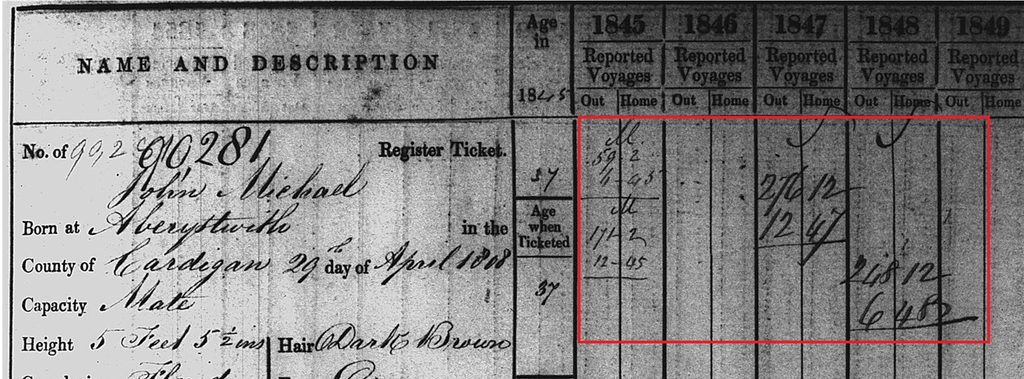
If you have family roots tied to mid-19th-century British merchant mariners, you know how quickly research can hit a brick wall. For years, family historians looking at the Register of Seamen’s Tickets (1845–1854) in the UK National Archives (Series BT113) encountered mysterious, handwritten numerical codes under the “Reported Voyages” column—such as 434-93 or 67/1847. For decades, these codes were written off by major archives and research guides as completely “unintelligible.”
That is, until Western Australian family historian Peter Hamersley decided to take a closer look.
He made a massive breakthrough in maritime genealogy with the launch of The Port Rotation Numbers Index, now freely searchable online. This incredible new database is the direct result of an ingenious idea by Peter Hamersley (a member of Family History WA), who refused to accept that these numbers were meaningless.
The Breakthrough
While tracing his own three-times great-grandfather, William Henry Hamersley, Peter spent years studying these voluminous, unindexed records. Thinking outside the box, he realized that if merchant ships maintained the same Port Rotation Number (PRN) across a single year, indexing a single census year could unlock the names of the majority of ships operating in the UK.
Choosing the census year of 1851 as his baseline, Peter began a massive spreadsheet project to cross-reference these codes with actual port and shipping registries. He soon partnered with Pete and Jan Owens of the acclaimed Crew List Index Project (CLIP). Together, along with a dedicated global team of volunteers, they spent nearly three years transcribing 443 microfilm rolls and matching these obscure codes to real vessels.
What This Means for Your Research
Thanks to Peter’s original concept and the collaborative work with CLIP, over 120,000 detailed entries have been added to the shipping database.
If you have a seafaring ancestor whose records contain these elusive numbers, you no longer have to wonder where they sailed. By plugging the PRN code into the new index, you can instantly find:
- The actual name and tonnage of the ship
- Its official port of registry
- Direct links to digital images of the original Crew Lists and Schedules on FamilySearch or at The National Archives (Series BT98).
This database transforms a series of dead-end numbers into a rich timeline of your ancestor’s voyages, revealing their earnings, the exact dates they were at sea, and even the daily food provisions they received.
A massive thank you and congratulations to our fellow WA researcher, Peter Hamersley, for his vision, determination, and incredible contribution to the global genealogy community!
Start Searching Today:
You can access the brand-new Port Rotation Number Index right now via the CLIP website at: crewlist.org.uk